Birds of Panama, Herons & Egrets (Art. 2)
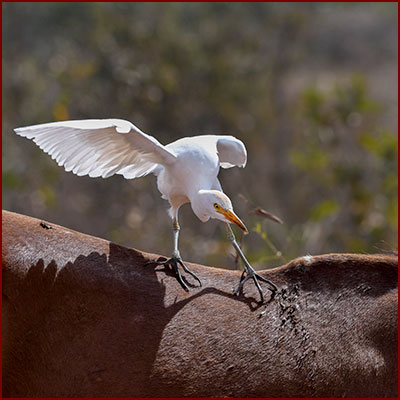
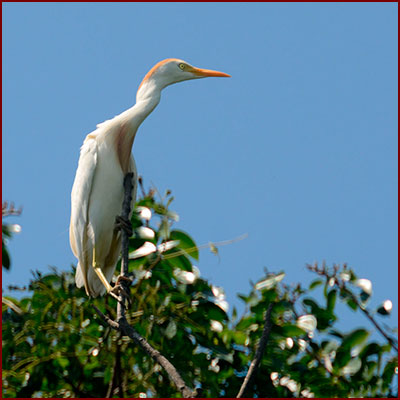
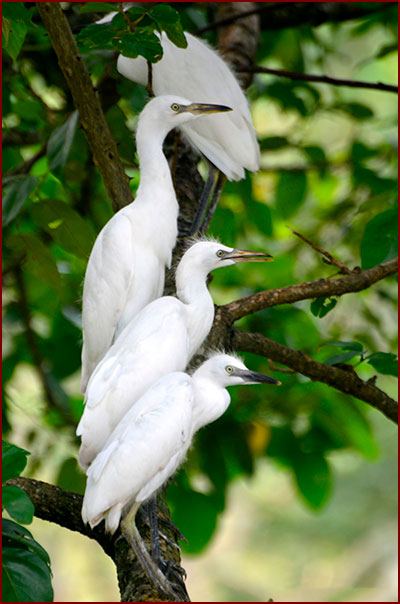
Cattle Egret (Ardea ibis)
Medium-sized and stocky. White with the top of the head and part of the back and belly sometimes a little orange, large yellow beak. It is often near cattle in fields, which gave it its name. It is found everywhere in the country, except at high altitudes.

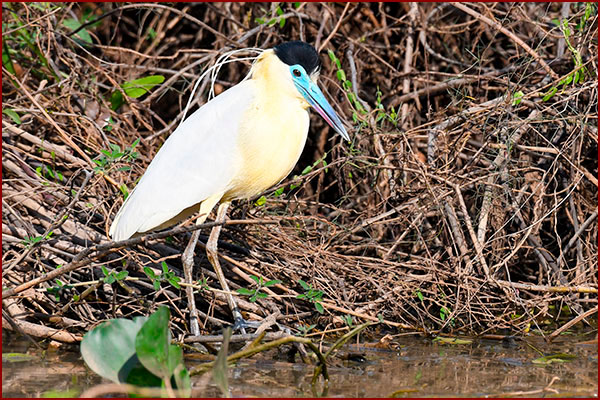
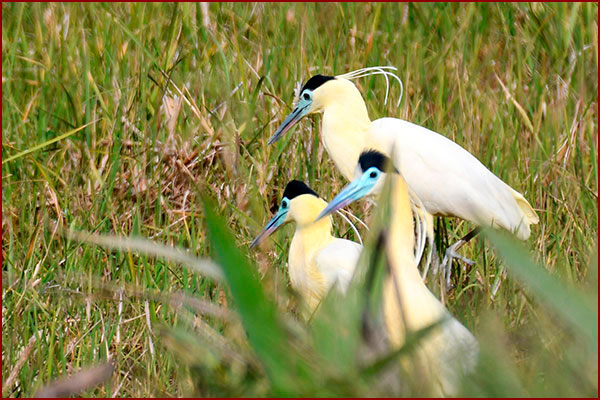
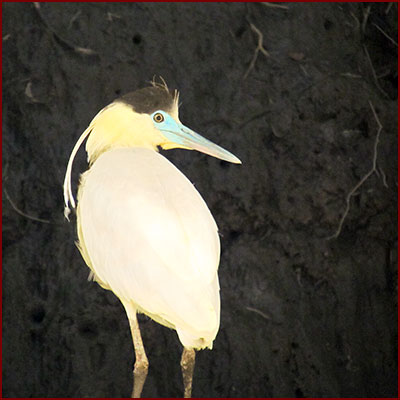
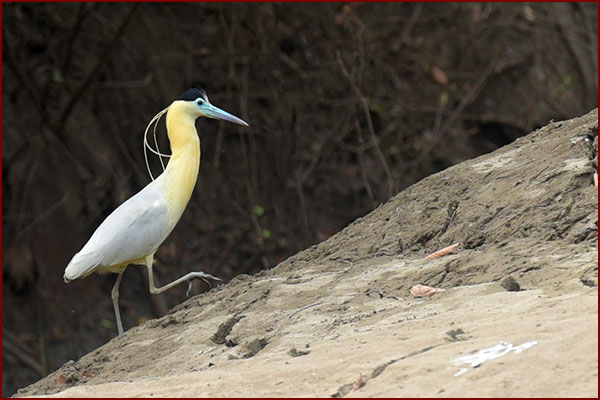
Capped Heron (Pilherodius pileatus)
Overall white, with a slightly orange-yellow neck and chest. It has a black cap and a white forehead. Two or three long white plumes hang behind the nape. Its beak varies in color depending on the period. It differs from other white herons by its thick and robust neck.
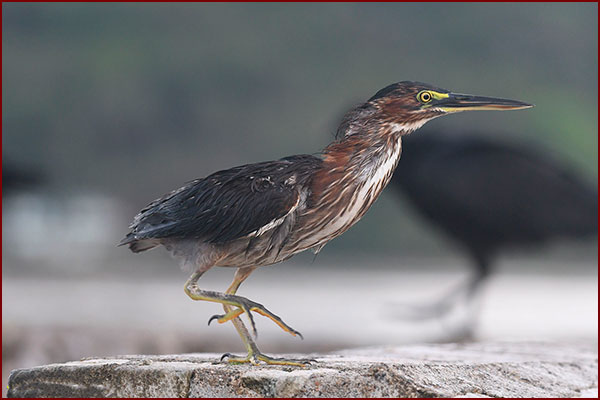
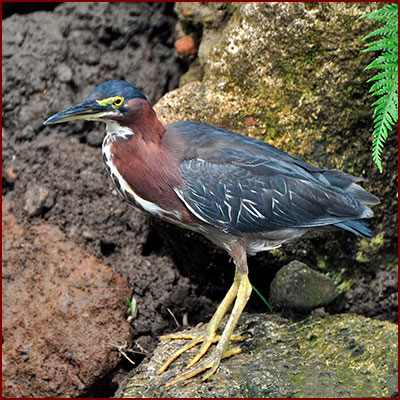
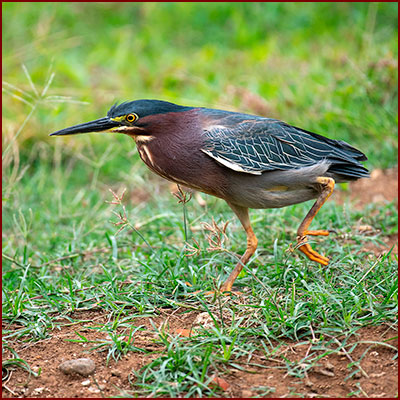
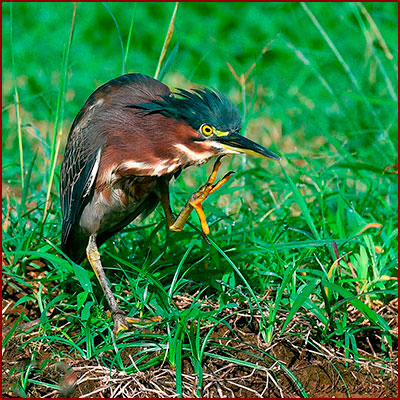
Green Heron (Butorides virescens)
Small and stocky, dark in color. The head, neck, and chest are a beautiful chestnut-purple. The head has a black cap and the back is gray. A white band divides the chest, which sometimes makes it resemble a Striated Heron. The green, which gave it its name, is only visible under a certain angle of light. The legs are yellow. Quite common throughout the country except above 1400 m.
Black-crowned Night Heron (Nycticorax nycticorax)
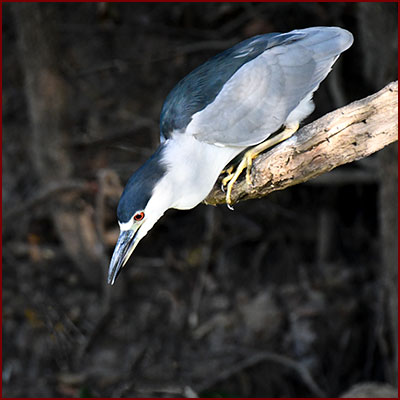
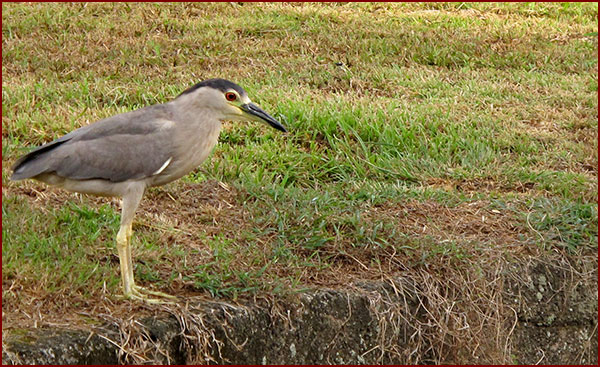
Nocturnal, it is sometimes visible during the day. When it is, it is easy to recognize. It is stocky with a broad head, its neck is thick, and its legs are short. The top of the head and the back are black, the belly is light gray. The nape has 2 or 3 long white filoplumes. It is uncommon and is found on the Pacific coast and on the banks of the Panama Canal.

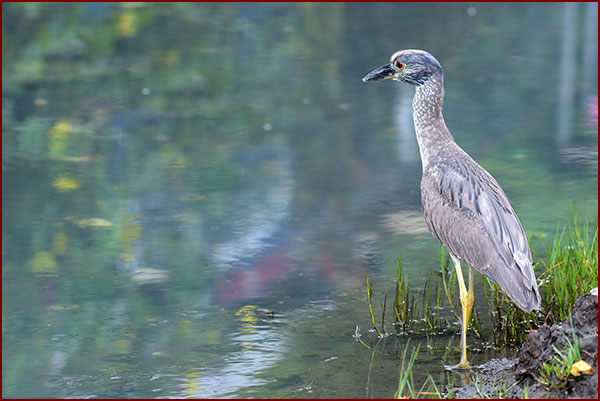
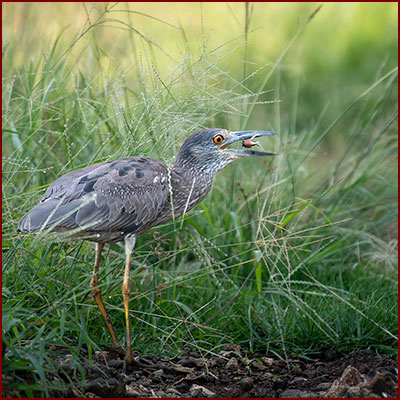
Yellow-crowned Night-Heron (Nyctanassa violacea)
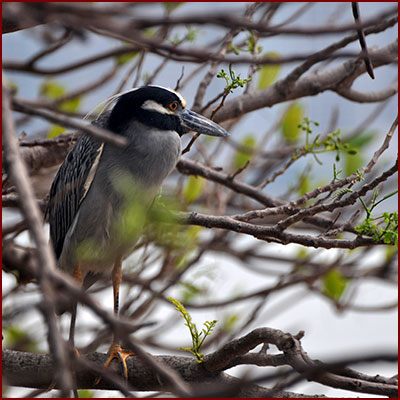
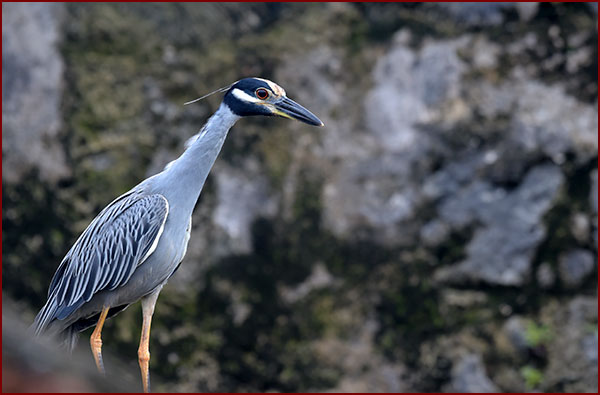
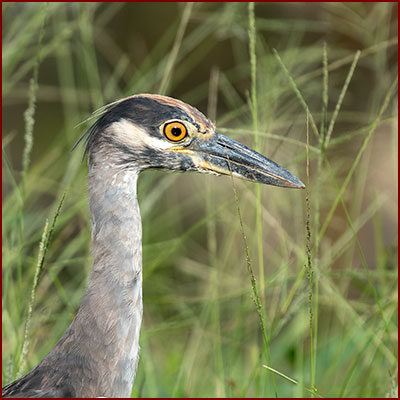
Elegant, it is blue gray with a black head, white cap, and white cheeks. During the breeding season, it has 3 long occipital plumes, and its iris and legs become scarlet.
It is observed foraging alone at the water’s edge, along the marine coastlines of the Atlantic and Pacific. In these areas, it can be found along the banks of shallow lakes or rivers.
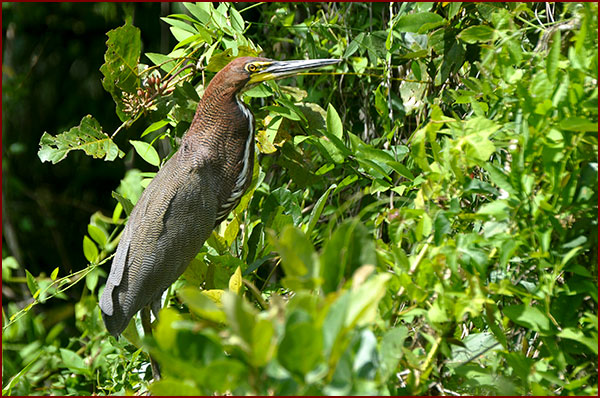
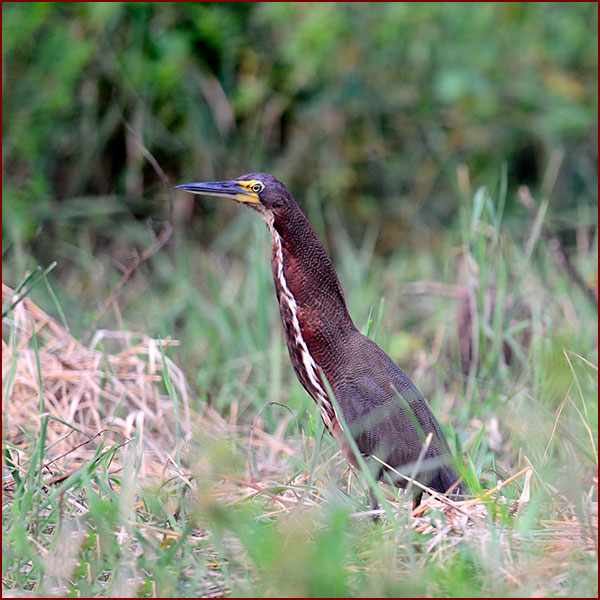
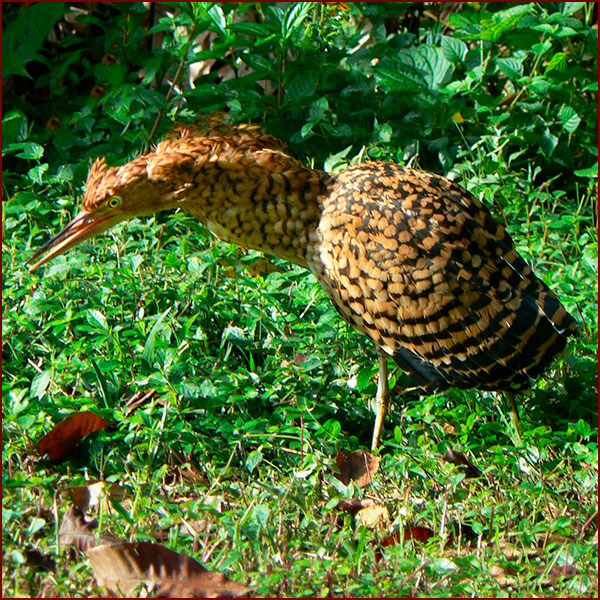
Rufescent Tiger-Heron (Tigrisoma lineatum)
It is a solitary bird that is normally active at night to feed, mainly on small fish and crustaceans. It hunts in shallow water, swamps, mangroves, or small rivers. Sometimes, it can be observed during the day near its favorite hunting grounds.Stocky, with a brown body, chestnut sides and back of the head, white throat and front of the neck, the latter adorned with long reddish-brown stripes. It is present all along the Atlantic coast and in the Darien.